
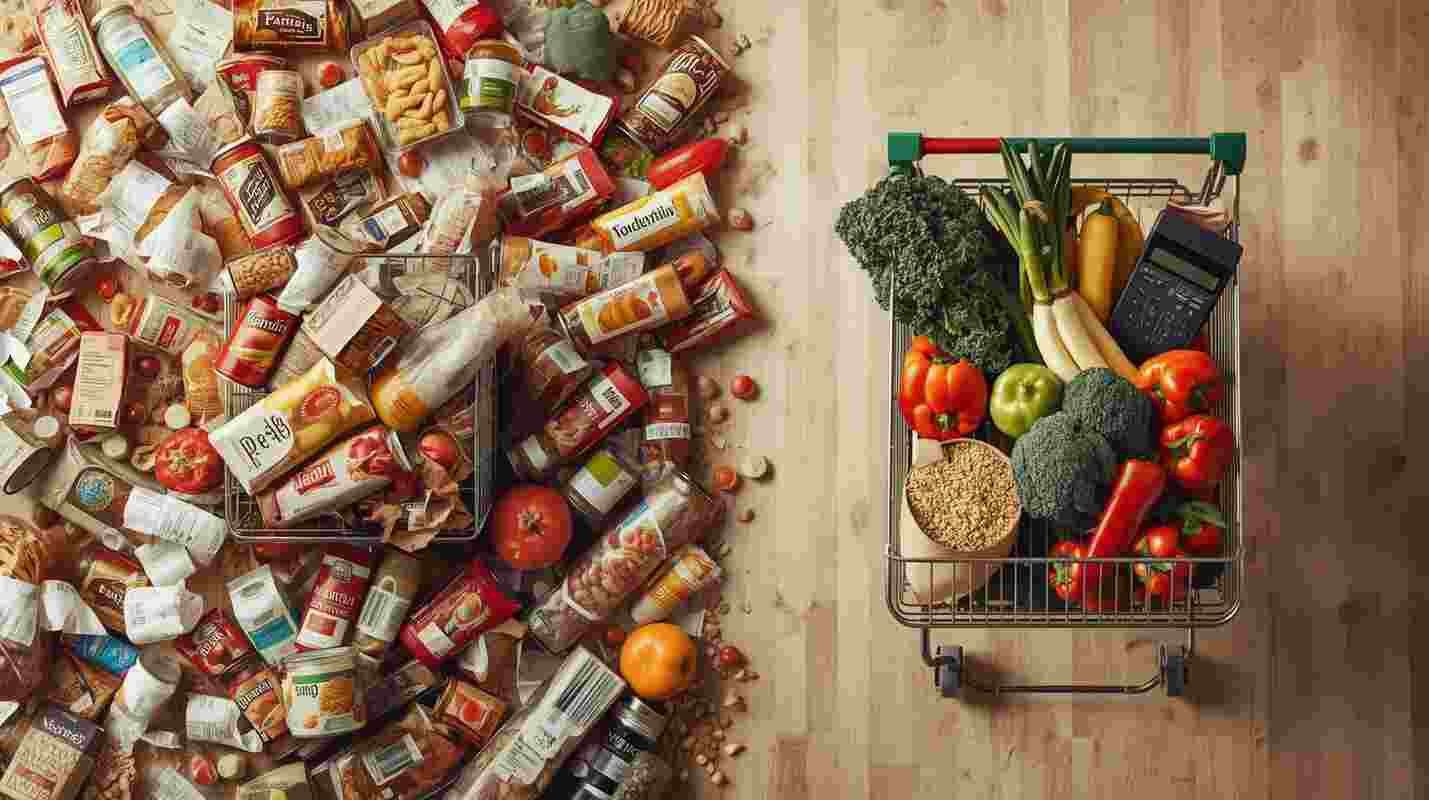
Are high food prices eating your budget? Discover actionable strategies to save up to $500 a month on groceries in the US. From meal planning to store psychology, learn how to cut costs without coupon clipping stress.
Let’s be real for a second: that grocery receipt at the end of a shopping trip feels like a punch in the gut lately. You aren’t imagining things. From 2019 to 2024, the price of food and beverages increased by a staggering 29.3% . With inflation, shrinkflation, and supply chain issues, the average family is hemorrhaging cash just to put dinner on the table.
But what if you could put $500 back in your pocket every single month?
While that number might sound like a fantasy, it is entirely achievable for the average family of four. The average family wastes an estimated $1,500 per year in food alone , and that doesn’t even account for overpaying on brand names or impulse buys. By combining strategic planning with a few insider secrets, you can slash your grocery bill by 30-40% without spending your life clipping coupons . Lets check out how to Save $500 a Month on Groceries in the US.
1. The “No-Waste” Challenge: Stop Throwing Cash in the Trash
Before we talk about how to shop, we have to talk about what you throw away. The average family of four throws away a shocking amount of food, totaling roughly $2,275 per year . If you are tossing out slimy lettuce, moldy berries, or last week’s leftovers, you are quite literally throwing cash into the landfill.
The Human Fix: Treat your fridge like a grocery store. Before you even think about making a shopping list, spend 10 minutes doing an “inventory check.” Look in the back of the fridge, the depths of the freezer, and the dark corners of your pantry .
-
“Eat Me First” Box: Dedicate a shelf in your fridge for items that are about to go bad. This visually reminds you to cook those ingredients tonight.
-
Leftover Night: Formally schedule one night a week where no one cooks. You raid the fridge, heat up leftovers, and clear the slate before your next big shop.
If you can reduce your household food waste by just 50%, you are already on track to save nearly $1,000 a year—about $83 a month.

2. The Psychology of the Store: Why You Buy What You Buy
Grocery stores are not designed for your convenience; they are designed for their profit. They are masterfully engineered to separate you from your money .
-
The Produce Section Ambush: You enter the store through the beautiful, fragrant produce section. This isn’t an accident. Fresh produce makes you feel virtuous, putting you in a spending mood before you hit the high-margin processed foods .
-
Endcaps are a Trap: Those displays at the end of the aisles? They are called “endcaps,” and they are prime real estate that brands pay big money for. Just because it’s at the end of the aisle doesn’t mean it’s on sale. Often, it’s just regular-priced items placed there to catch your eye .
-
Eye Level is Buy Level: Look up. Look down. The most expensive items are placed at eye level. The cheaper store-brand or generic alternatives are usually on the bottom shelf, forcing you to bend down and “work” for the savings .
The Human Fix: Turn shopping into a game. When you walk in, remind yourself that you are entering a “combat zone.” Stick to your list like a security blanket. If an item isn’t on the list, it doesn’t go in the cart unless it replaces something else.
3. Master the “Tiered” Shopping List
Most people write a vague list (“food for dinners”) and hope for the best. To save $500 a month, you need a strategic list. Experts suggest using a “Three-Tier List Method” :
-
Tier 1: The Essentials. These are the items you cannot live without this week—milk, eggs, bread, and specific ingredients for planned meals.
-
Tier 2: The Stock-Up. These are non-perishable staples that are currently on sale. If you see a rock-bottom price on canned tomatoes or pasta, you buy enough to last until the next sales cycle (usually 6-8 weeks) .
-
Tier 3: The Treats. This is your budget for fun. Soda, snacks, or that fancy cheese. But here is the rule: you can only buy Tier 3 items if you have proven savings in Tiers 1 and 2.
Before you walk in the door, assign a dollar amount to each tier based on your budget. If you spend $600 a month, aim for $400 on essentials, $150 on stock-up, and $50 on treats. This keeps the “wants” from overwhelming the “needs.”
4. Rethink Your Protein (This is Where the Money Is)
Meat is usually the most expensive line item on your receipt. With meat prices currently running about 5.6% higher than last year, you cannot afford to ignore this category .
The Human Fix: The “Halfway” Swap.
You don’t have to go full vegetarian to save money (unless you want to). Try the “blended” approach.
-
Stretch the Meat: If you are making tacos, use half the ground beef and replace the other half with a can of black beans or lentils. You won’t taste the difference, but your wallet will .
-
Cheap Cuts are Tastier: Don’t buy chicken breasts; buy chicken thighs. They are cheaper per pound and much harder to overcook, meaning less waste .
-
The $6.16 Solution: If you really want to save, designate two nights a week as “plant-based.” A pound of dried beans costs around $2 and provides eight servings of protein, compared to a pound of ground beef at $6-8 for four servings .
Savings Potential: If a family of four replaces two meat-centric dinners with plant-based or “stretched” meals each week, you can easily save $50–$80 a month.
5. Go “Frozen” (It’s Often Better Than Fresh)
There is a stigma around frozen vegetables that needs to die. Frozen fruits and vegetables are flash-frozen at peak ripeness. This means they often retain more vitamins than “fresh” produce that was picked early and traveled 1,500 miles to sit on a truck .
The Human Fix: Unless you are eating the produce raw in a salad (like lettuce), buy it frozen.
-
Frozen spinach for omelets and soups.
-
Frozen berries for smoothies.
-
Frozen stir-fry veggie mixes.
Frozen food has a shelf life of 8-12 months, which means zero waste . You use exactly what you need and put the rest back in the freezer.

6. The “Unit Price” Secret
Retailers love to trick you with “shrinkflation”—making the package smaller but keeping the price the same. The only way to fight this is by looking at the unit price (the price per ounce or per pound) .
This is usually printed in the tiny numbers on the shelf tag right below the big product price.
The Human Fix: Sometimes, the “family size” box is actually more expensive per ounce than the regular size. Sometimes, buying a block of cheese and grating it yourself is half the price of the pre-shredded bag (which also contains anti-caking agents that ruin melting).
7. Digital Stacking: Get Paid to Shop
We aren’t talking about extreme couponing that requires a binder and a spreadsheet. We are talking about stacking digital tools .
Think of it as a three-layer cake:
-
Store Loyalty Program: This gives you the “member” price. If you aren’t using a loyalty card, you are paying a “stupid tax.” It’s free—just do it .
-
Cash-Back Apps: Apps like Ibotta or Fetch give you cash back on specific items. After you shop, you scan your receipt. It’s free money .
-
The Right Credit Card: If you pay your balance in full every month (crucial!), use a card that offers 3% to 6% cash back on groceries. This is essentially an automatic discount .
The Human Fix: You don’t need to check the apps every day. Once a week, quickly look at the offers in Ibotta. If they align with what you already buy, great. If not, ignore them. Don’t buy something just because the app tells you to.
The Math: How We Get to $500
Let’s add this up for a hypothetical family of four currently spending $1,000 a month on groceries.
| Strategy | Estimated Monthly Savings |
|---|---|
| Cut Food Waste in Half (Using inventory checks and leftover nights) | $80 |
| Reduce Meat/Meatless Meals (2 nights a week) | $70 |
| Switch to Generic Brands (Save 30% on staples) | $100 |
| Strategic Stockpiling (Buying sales cycles vs. paying full price) | $100 |
| Digital Stacking (Loyalty + Apps + Cashback Card) | $50 |
| Frozen & Seasonal Buying (Cheaper produce, no spoilage) | $100 |
| TOTAL SAVINGS | $500 |
Conclusion: It’s a System, Not a Sacrifice
Saving $500 a month on groceries isn’t about starving yourself or living on ramen. It is about changing your relationship with food and the store. It’s about understanding that the grocery store is a psychological battlefield and showing up prepared with your list and your strategy.
By implementing just three of these tips—checking your inventory, comparing unit prices, and buying frozen—you will see an immediate difference in your receipt total. For more ways to stretch your dollar and make your money work for you, keep it locked on MoneyInMind.net.