
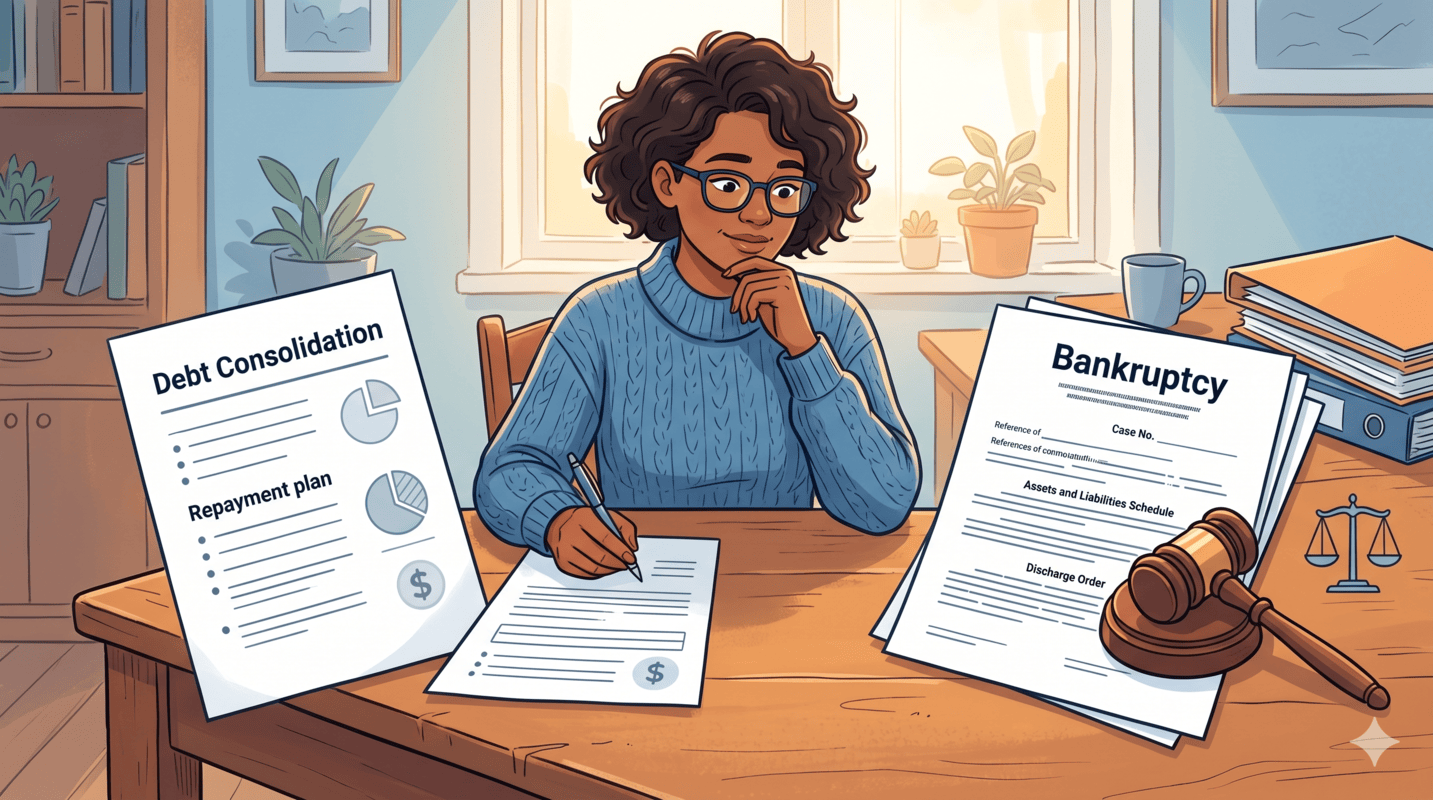
Debt Consolidation vs Bankruptcy: 7 Critical Differences You Must Know
Debt consolidation vs bankruptcy is one of the toughest financial decisions you’ll ever face. If you’re drowning in credit card bills and past-due notices, you’re not alone—and more importantly, you do have options.
Millions of Americans struggle with debt. The average credit card balance per person sits around $6,140, and when those numbers spiral out of control, two paths often emerge: debt consolidation vs bankruptcy. But which one is actually right for you?
Here’s the honest truth: debt consolidation should almost always be your first stop before considering bankruptcy. Let’s break down exactly what both options mean, so you can make an informed decision without the confusing jargon.
What Is Debt Consolidation?
Debt consolidation is exactly what it sounds like—you’re taking all your outstanding debts and combining them into one single monthly payment. Think of it as tidying up a messy financial closet.
Instead of juggling multiple credit card bills with different due dates, interest rates, and minimum payments, you’re streamlining everything. This can be done in a few ways:
-
Taking out a new, larger loan to pay off existing debts
-
Using a balance transfer credit card with a lower introductory rate
-
Working with a debt consolidation company that negotiates with creditors on your behalf
Why Consider Debt Consolidation First?
The benefits can be life-changing for the right person:
-
Simplified payments: One bill. One due date. One less thing to stress about
-
Potential interest savings: If you qualify for a lower rate, more of your money goes toward the principal balance
-
Less emotional baggage: Unlike bankruptcy, debt consolidation isn’t a public record
-
Clearer timeline: Many consolidation plans can get you debt-free in 24 to 48 months
The Catch
Debt consolidation isn’t a magical fix. It only works with unsecured debt like credit cards and personal loans—it won’t help with student loans or tax debt. You typically need decent credit to qualify for favorable rates.
What Is Bankruptcy?
Bankruptcy is a legal proceeding that either eliminates or restructures your debt under federal law. There are two main types for individuals:
Chapter 7 Bankruptcy (The “Fresh Start”)
-
Eliminates most unsecured debts
-
Usually takes 3 to 4 months
-
You typically get to keep your car and most possessions
-
Requires passing a “means test”
Chapter 13 Bankruptcy (The “Reorganization Plan”)
-
Restructures debts into a 3-to-5-year repayment plan
-
Can help save your home from foreclosure
-
Often you only pay back a portion of what you owe
-
Has debt limits: currently $419,275 for unsecured debt
When Is Bankruptcy the Right Choice?
Financial experts generally recommend bankruptcy only when:
-
Your debt is so overwhelming you realistically can’t pay it off within 2 to 5 years
-
You’ve exhausted all other options
-
Your credit score has already taken a serious hit
-
You have legal support to guide you
The Brutal Consequences
Bankruptcy is a powerful tool, but use it carefully:
-
Stays on your credit report for up to 10 years
-
Public record—anyone can see it
-
Can make it harder to rent a home or get a mortgage
-
Expensive legal fees and an emotionally taxing process
Debt Consolidation vs Bankruptcy: 7 Critical Differences
Now let’s compare debt consolidation vs bankruptcy directly across 7 important factors:
1. Credit Score Impact
Debt consolidation can actually help your credit score if you make payments on time. It reduces your credit utilization ratio and shows responsible debt management.
Bankruptcy, however, severely damages your credit score. Chapter 7 stays on your report for 10 years. Chapter 13 stays for 7 years.
2. Public Record
Debt consolidation is private—no one knows you’re using it unless you tell them.
Bankruptcy is a public record. Anyone can search for it, including potential employers and landlords.
3. Asset Protection
With debt consolidation, you keep all your assets. It’s simply reorganizing your payments.
Bankruptcy, especially Chapter 7, may require you to liquidate certain assets to pay creditors.
4. Cost
Debt consolidation typically costs nothing upfront (except interest). Some consolidation companies charge fees, but they’re usually modest.
Bankruptcy requires court fees and attorney fees. Chapter 7 can cost $1,500-$3,500. Chapter 13 can cost $3,000-$6,000.
5. Time to Complete
Debt consolidation takes 24-48 months to pay off the loan completely. You see progress monthly.
Chapter 7 bankruptcy takes 3-4 months total. Chapter 13 takes 3-5 years of repayment.
6. Eligibility
For debt consolidation, you need decent credit and steady income to qualify for a loan.
Bankruptcy has strict income limits through the means test. High earners may not qualify for Chapter 7.
7. Emotional Toll
Debt consolidation reduces stress without the stigma. You’re taking positive action.
Bankruptcy carries significant emotional weight, shame, and social stigma. It’s legally and emotionally draining.
Debt Consolidation vs Bankruptcy: Which Is Better for You?
When comparing debt consolidation vs bankruptcy, here’s the honest truth:
Choose debt consolidation if:
-
You have a steady income
-
Your credit score is still decent (620+)
-
Your total debt is manageable with lower interest
-
You want to protect your credit score
-
You’re disciplined enough to stop using credit cards
Choose bankruptcy if:
-
Your debt is so high you can’t possibly repay it
-
You’ve already tried every other option
-
Your credit score is already ruined
-
You face wage garnishment or foreclosure
-
You have minimal assets to protect
Real-World Example
Sarah, a 34-year-old teacher from Ohio, had $28,000 in credit card debt spread across 6 cards. She was paying $850 monthly in minimums with 24% average interest. She compared debt consolidation vs bankruptcy and chose consolidation. She got a personal loan at 11% interest and now pays $615 monthly. She’ll be debt-free in 48 months and her credit score climbed 40 points in the first year.
James, a 52-year-old contractor from Florida, had $85,000 in business and personal debt after a project failed. His credit score had dropped to 520. After comparing debt consolidation vs bankruptcy, he filed Chapter 7. He kept his home and vehicle and was discharged in 4 months. He’s rebuilding his credit now with secured cards.
Your Action Plan
Here’s what you can do right now when deciding between debt consolidation vs bankruptcy:
-
Check your credit score at AnnualCreditReport.com (free weekly reports)
-
List all your debts with balances, interest rates, and minimum payments
-
Research consolidation options—compare loans and balance transfer cards
-
Schedule a free consultation with a certified credit counselor
-
Only consider bankruptcy as an absolute last resort
Frequently Asked Questions
Is debt consolidation better than bankruptcy?
For most people, debt consolidation is better than bankruptcy because it protects your credit score and doesn’t become a public record. Consolidation is usually the right first step.
Can I file bankruptcy after debt consolidation?
Yes, you can file bankruptcy after consolidation if the plan doesn’t work. However, the bankruptcy court will examine the consolidation as part of your financial history.
Does debt consolidation hurt your credit?
Debt consolidation can temporarily lower your credit score by a few points when you apply for a new loan. But over time, making regular payments improves your score significantly.
How much debt is too much for consolidation?
There’s no specific limit, but most lenders prefer a debt-to-income ratio below 40%. If your debt exceeds $50,000-$75,000, bankruptcy might be the better option.
Is bankruptcy always a bad choice?
No. For people with overwhelming debt and damaged credit, bankruptcy offers a legitimate fresh start. It’s a legal tool designed to help people recover financially.
Final Thoughts
Deciding between debt consolidation vs bankruptcy isn’t easy. It requires honest self-reflection about your income, your habits, and your goals. But here’s the good news: you’re already taking the hardest step—facing the problem head-on.
Debt consolidation offers a path that protects your credit and your reputation. It requires discipline and a commitment to staying out of debt in the future. For most people, it’s the smarter, less damaging choice.
Bankruptcy is a powerful legal tool that can offer a fresh start when everything else has failed. It should be your absolute last resort, but if you need it, don’t be ashamed to use it.
Remember: The decision between debt consolidation vs bankruptcy affects your financial future for years. Take your time, research thoroughly, and don’t hesitate to seek professional advice.
Disclaimer: This article is for informational purposes only and does not constitute financial or legal advice. Always consult a qualified professional for your specific situation.